Educating for Wisdom, not Work by Sean Herhold
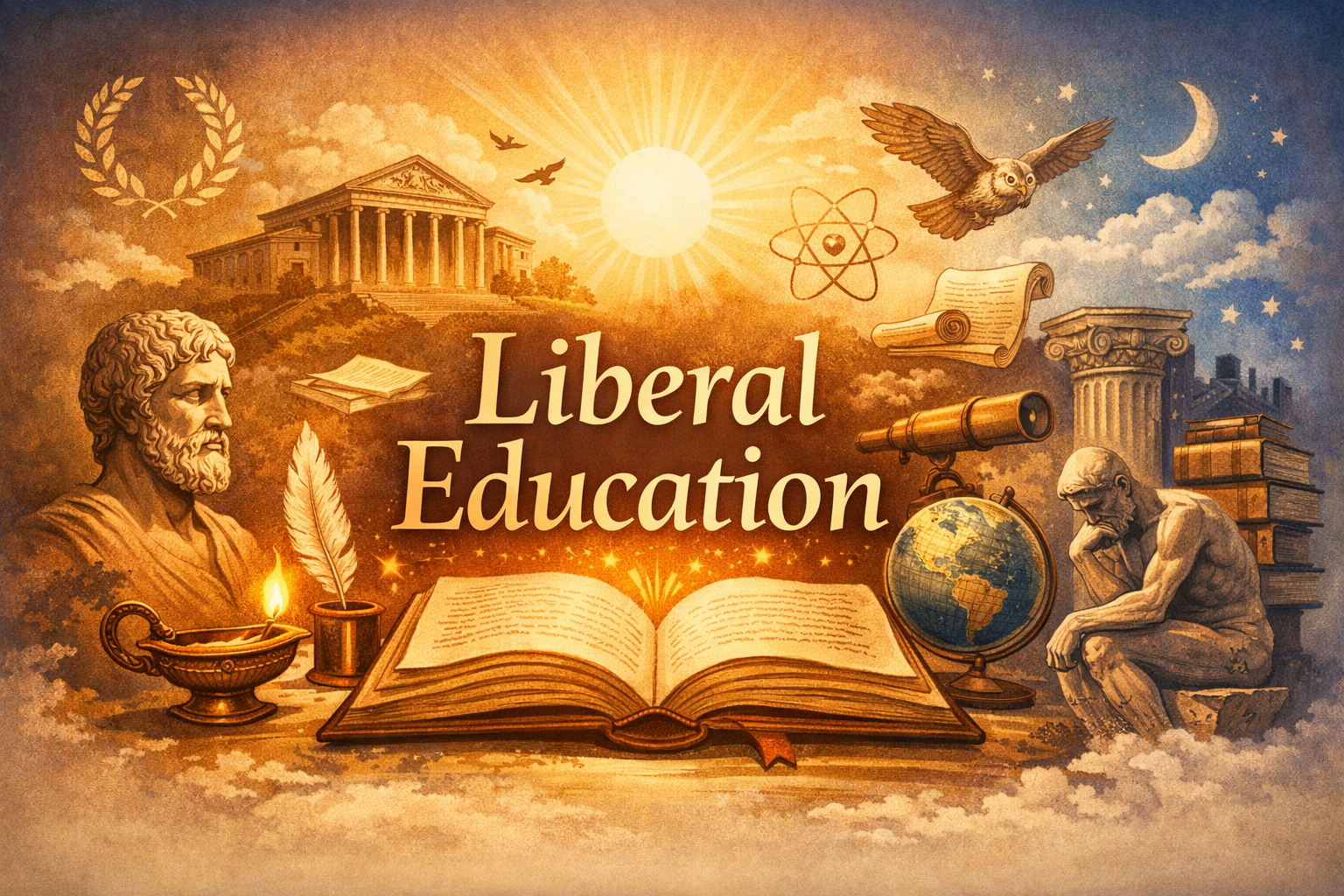
Take a moment to read this quote by Woodrow Wilson,
“We want one class of persons to have a liberal education, and we want another class of persons, a very much larger class, of necessity, in every society, to forgo the privileges of a liberal education and fit themselves to perform specific difficult manual tasks.”
I would advise you to stop here and read it again. Read it a few times, or until you’ve really soaked in what Woodrow Wilson was saying in 1909.
Yes, then president of Princeton, soon to be president of the United States, Woodrow Wilson is advocating for two different education plans for two different classes of people. One class, the elite class presumably, would receive a Liberal Education (note: at that time a liberal education was a ‘liberating education.’ An education that freed men by freeing the mind. A liberal education was an education for free men.) Then, Wilson advocates for another kind of education for another class (and we can infer a lower class) of men. Those not fit for the education of free men, should resign themselves to just prepare for their future jobs. This is what we today call vocation training. In the Greco-Roman world, that was understood to be the education for slaves.
Let all of that sink in. One class, obviously the elite class, would get the liberal education and presumably would be the small group of people who go on to make the important decisions, lead the country, and direct the masses. While the masses need not bother with an education like that, they should just go to vocational training. How can an idea that is so anti-democratic, and anti-American, come from the president of one of the nation's most prestigious universities over a hundred years ago in 1909? And how can that same man later be elected president of the nation, a remarkable feat that requires the support of the masses, the masses that he essentially dismissed as not worthy of an elite education?
I imagine that any parent reading this article, if they were asked whether they would prefer that their children have an elite education, or just some vocational training, they would elect for the elite education. Or would they?
When presented with these two options, the choice seems obvious. “What is good for the best is good for my child” and “I want my child to have the best” are things I would expect most parents to say if given these two options. But unfortunately, the two options are not typically presented side by side like that, and perhaps naively, parents often opt for vocational training instead of a liberal education.
After all, what good is an education that “frees the mind” or “cultivates the soul” in a competitive job market. And
there is the trap. What is the purpose of education? To prepare a student for a vocation? Or to cultivate the mind and soul of the student into a fully developed and virtuous person.
This is where we are fortunate. Because I don’t believe these two purposes are mutually exclusive. Perhaps one produces the other. A virtuous person is a vocationally adept person. But that’s not to say a vocationally prepared person is a virtuous one.
“Aim at Heaven and you will get earth ‘thrown in’: aim at earth and you will get neither.”
- C.S. Lewis.
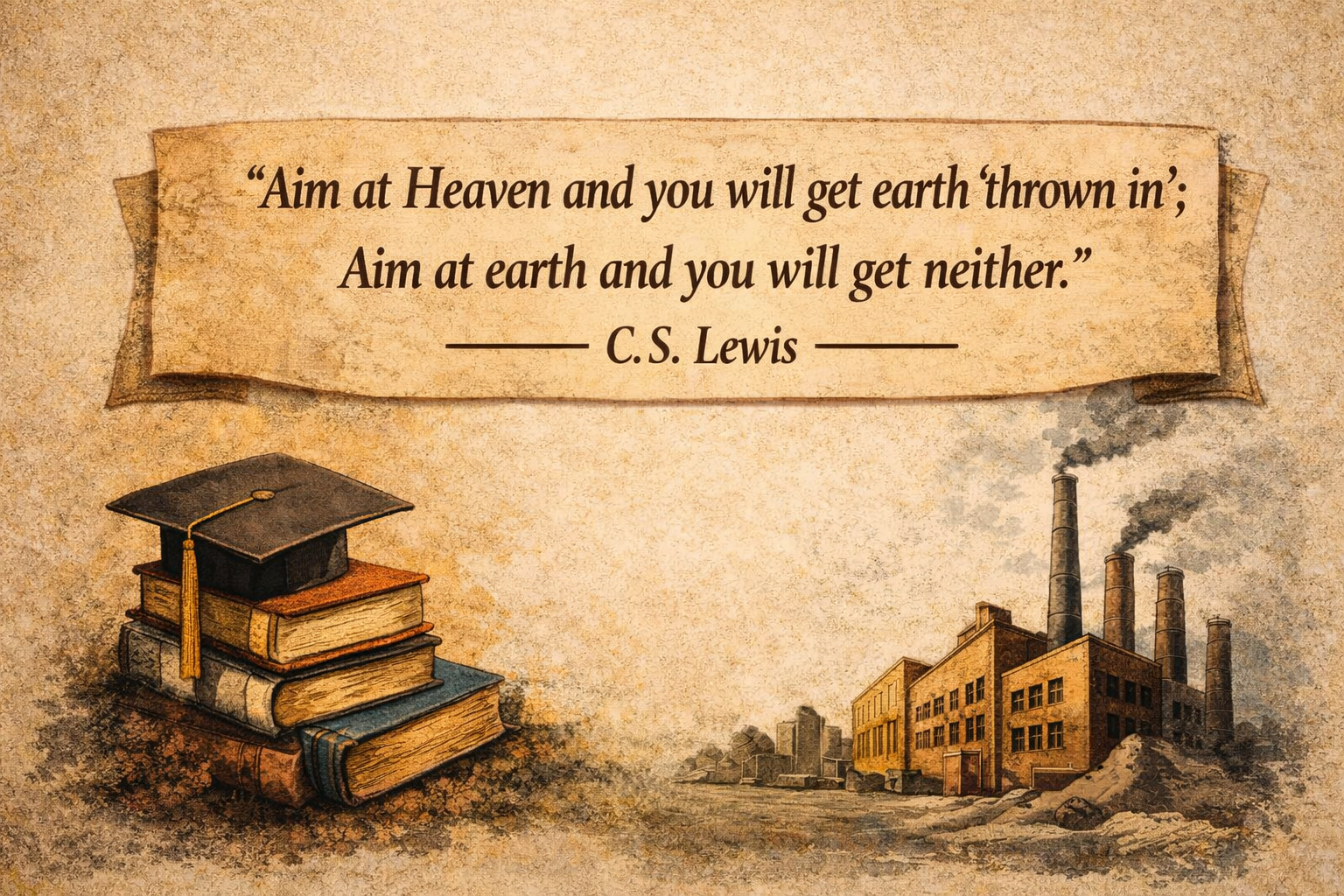
Pursue an education of virtue, and you’ll be ready vocationally, and probably in a better and broader way than you imagined. But pursue a vocational education, not only will you lack virtue, but you’ll be lucky if the practical skills you learned yesterday are still needed in tomorrow’s ever changing job market. Develop the virtue of prudence in school and you’ll be able to learn any essential skill you desire and apply it when it is useful.
So, then why did Woodrow Wilson, and other progressive educators desire to trade a liberal education for the masses for a vocational one? For some progressive educators, perhaps their ideas were nefarious. Perhaps they wanted a dumb-downed population that would be easier to lead and sway. For other progressive educators, perhaps their intentions were well-meaning. America was in the height of the Industrial Revolution. There were millions of factory jobs that needed filling. And these jobs did not require a very impressive specimen, they just needed people to do “specific hard manual tasks” repeatedly. No thinkers please, just do what you are told and there will be a paycheck waiting for you.
In the first half of the 20th century, super industrialist tycoons and entrepreneurs like Carnegie and Rockefeller set up foundations that contributed more dollars to American education than the government did. Why? Because they wanted schools to become like their factories, an assembly line turning children into factory workers. Not only did this give them the manpower they needed for their mega-corporate empires, but it also killed much of their would-be competition in its infancy. Carnegie himself refused to be subjugated to the education system as a child, but he became very interested in subjugating others. After all, free thinkers, creative minds, and adventurous spirits were a threat to his profits.
And thus, in the 1900s, the pattern of education reforms began. And every 20-30 years some new education reform appears to help solve all the problems the last one created. But the common denominator between all of them, whether it’s see-say reading, or common core, they all have a similar purpose rooted in training students up to be ready for America’s jobs. They are vocational reforms.
The most recent fad perhaps sounds the most useful of them all. In the technology age, what better education can you have then Science, Technology, Engineering, and Mechanics (STEM)?
But whatever vocational skills you give a child now (even ones regarding technology) will be outdated in the job markets of tomorrow. And they will have been robbed of an education that forms the mind, cultivates the soul, and develops them into a virtuous person.
“But will my kid be able to get a job?” That is the question that holds some parents back. This issue is resolved much like the issue of standardized testing. Students with a classical education, focused on cultivating virtue and the mind, do much better than students in schools that “teach to the test.” You see, one group aims for heaven, and gets earth too. While the other aims for earth and gets neither.
Many of the big tech companies of our time are realizing they don’t want the student who has a degree, they want the student who has the virtue of prudence. Now, maybe they don’t use those terms, but places like Apple, Microsoft, Tesla, etc. have come to realize that technical skills can be taught easily to a person who knows how to learn.
We shouldn’t be surprised about this phenomenon. It is in line with what Jesus promised in Matthew 6:32, “Seek ye first the kingdom of God and his righteousness, and all these things will be added unto you.” Grow in spirit, cultivate the mind, learn to be virtuous, and the future job will take care of itself.
That’s why here at FBA, we educate for Wisdom, not Work.
Sean Herhold, Principal
Faith Baptist Academy
Sean@faithbaptistofwc.org